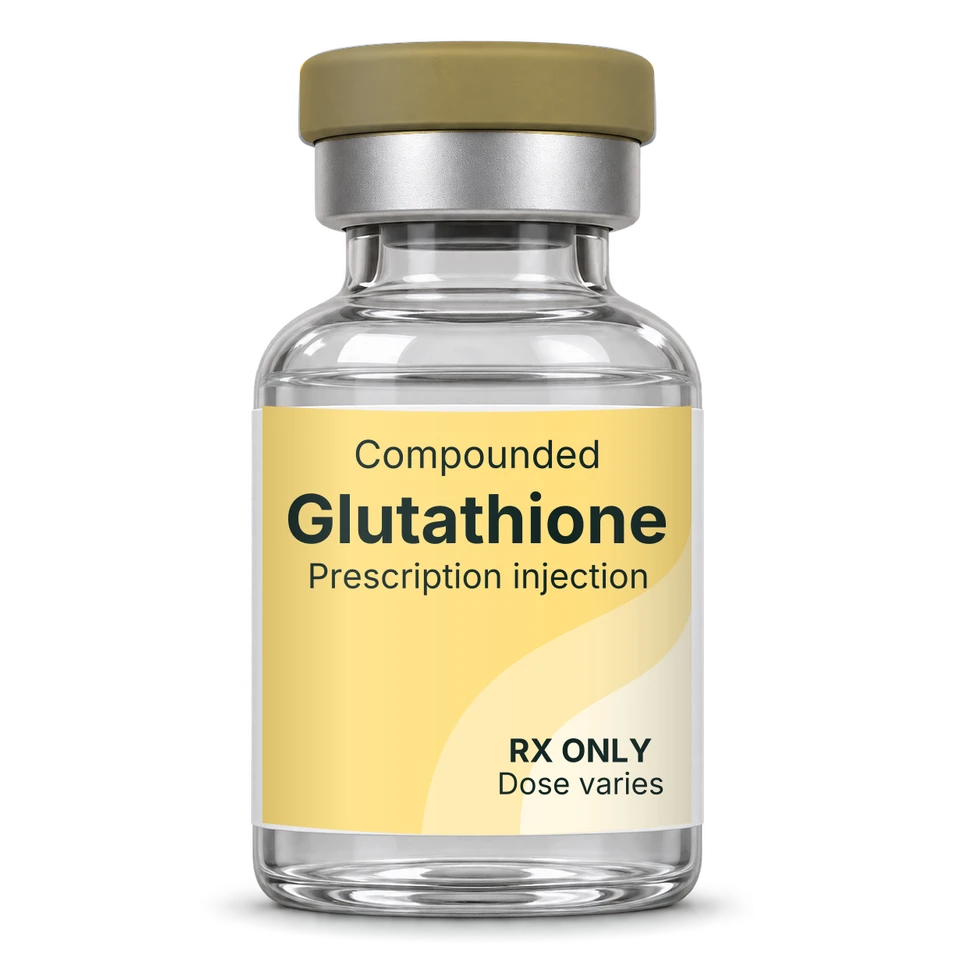


GSH-01Glutathione
A naturally occurring tripeptide composed of glutamine, cysteine, and glycine that helps defend cells against oxidative stress and supports liver detoxification and immune resilience.
- Form
- Injection
- Compounded by
- A licensed US pharmacy
- Prescribed by
- A licensed US clinician
- Follow-up
- Check-ins with your care team
$124/mo
Prescription required; a licensed clinician decides if it’s appropriate.
Start the screener 2 min screenerPrivate online screener. A licensed US clinician reviews every request.
What it is
Glutathione is a tripeptide, a small molecule built from three amino acids: glutamate, cysteine and glycine. Often called the body’s master antioxidant, it works inside your cells, where it neutralizes free radicals, helps recycle vitamins C and E, and helps the liver process compounds. Here it’s compounded for injection, a different route from the supplements sold in stores.
Designed for:
- A licensed clinician review before anything is prescribed
- Compounded by a licensed US pharmacy, to your prescription
- Check-ins with your care team while you use it
Individual experiences vary; some people notice no change.
How it’s taken
As an injection, exactly as your clinician prescribes. Your care team explains how and how often, and answers questions along the way. Don’t change how you use it without talking to them first.
Who prescribes
A licensed US clinician reviews your screener and health history and decides whether glutathione is appropriate for you. If it isn’t a fit, they’ll tell you why.
Safety information
Compounded; not FDA-approved, and glutathione is not FDA-approved for any use. Possible side effects include pain, redness or bruising where you inject, and allergic reactions. Get medical help right away for fever, chills, dizziness or trouble breathing after an injection. Safety in pregnancy and breastfeeding has not been established.

The potential benefits of glutathione.
Explore Glutathione With a ClinicianAntioxidant defense
Often called the master antioxidant, glutathione works inside cells to neutralize free radicals and recycle vitamins C and E. Researchers are studying whether adding it raises the body’s levels.
Liver support
Your liver relies on glutathione to process medications, alcohol and everyday pollutants. It’s being studied for its role in liver health and normal liver enzyme levels.
Immune function
Immune cells, including T cells and natural killer cells, rely on glutathione to work normally. Researchers are exploring whether supplementing it may support immune resilience.
Energy and recovery
Mitochondria, the parts of your cells that make energy, depend on glutathione for protection from oxidative damage. Its role in energy and exercise recovery is being studied.
Glutathione is not FDA-approved for any use. Research on supplemental glutathione is limited, and individual experiences vary.
Who glutathione may be for.
People who ask a clinician about glutathione often fit one of these. Open one to read more.
Glutathione is not FDA-approved for any use. Evidence varies by use, and research on supplemental glutathione is limited. A licensed clinician reviews your health history and decides if it’s appropriate. It doesn’t replace care you already receive.

Support for the Years Ahead.
Glutathione levels tend to decline with age. Researchers are studying whether restoring them supports cellular health as you get older, and your clinician can tell you if it fits your plan.
Healthy aging
Support for the Years Ahead.
Glutathione levels tend to decline with age. Researchers are studying whether restoring them supports cellular health as you get older, and your clinician can tell you if it fits your plan.
Training
Train Hard. Plan the Rest.
Hard training creates more oxidative stress in the body. Researchers are studying whether glutathione may support how the body handles it and how you recover, and your clinician can tell you whether it fits your plan.
Hormone care
Support Alongside Hormone Care.
Hormone therapy can raise training intensity and the work your liver does. Glutathione is being explored as cellular and liver support alongside hormone care, never as a replacement for it.
Metabolic health
When Metabolism Is Under Strain.
Lower glutathione levels have been linked with insulin resistance and type 2 diabetes in research. Small studies are exploring whether supplementing it supports metabolic health. It doesn’t replace your current treatment.
Liver health
Give Your Liver a Hand.
Your liver uses glutathione to process medications, alcohol and pollutants. Researchers are studying its role in liver health, and your clinician will want your full medication list and recent labs.
Immune support
Back on Your Feet.
Immune cells depend on glutathione to work normally. Researchers are exploring whether supporting it helps the body’s immune response while you recover. It isn’t a treatment for any infection.
Environment
For Everyday Exposures.
Smoke, traffic fumes and workplace chemicals all add to oxidative stress. Your body uses glutathione to process them, and a clinician can tell you whether added support makes sense.
Skin health
Skin Faces Stress Too.
Sun and pollution create oxidative stress in skin cells. Glutathione is being studied for its role in skin health. It isn’t prescribed here to lighten or change skin tone.

How does glutathione work?
What researchers understand so far, in three steps. Much of it is still being studied.
01Three amino acids
Glutathione is a tripeptide made from glutamate, cysteine and glycine. Your cells make it and keep most of it in its active form.
02Used, then recycled
It gives up electrons to neutralize reactive molecules from normal metabolism, then the body recycles it back to its active form.
03Prescribed to you
A clinician decides whether added glutathione makes sense, and how often. How well injections raise levels inside cells is still being studied.
This describes glutathione’s role in the body. Research on supplemental and injected glutathione is limited and still early. Compounded; not FDA-approved. Individual experiences vary.
One Molecule. Prescribed With Care.
Glutathione is built from just 3 amino acids and is found in nearly every cell of your body. Here it’s an injection, compounded by a licensed US pharmacy to the dose your clinician prescribes.
Your clinician sets the dose and schedule after reviewing your health history, and may adjust them at check-ins. We don’t publish doses because they’re individual.


Start Simple. Progress Over Time.
Glutathione is prescribed as part of a plan your clinician reviews with you. Here’s how the first weeks are set up.
Week 1
Getting Started°
- A licensed clinician reviews your screener and history
- Your prescription is compounded by a licensed US pharmacy
- Your care team shows you how to use it
Week 4
First Check-In°
- Talk through how it’s going, side effects included
- Share what you’ve noticed, or haven’t
- Your clinician decides whether to continue or adjust
Week 8
Reviewing the Plan°
- Step back and look at the bigger picture
- Decide together whether glutathione still fits
- Adjust the schedule, pause or stop
Ongoing
Ongoing Support°
- Refills only while your clinician approves them
- Message your care team with questions
- Re-check if your health or medications change
°Illustrative care milestones, not guaranteed outcomes. Check-in timing is set by your clinician. Individual experiences vary, and some people notice no change.
Questions, answered plainly.
Anything else, ask your clinician during your consult.

What is glutathione?
Glutathione is an antioxidant your body makes from three amino acids: glutamate, cysteine and glycine. Often called the master antioxidant, it’s found in nearly every cell, where it neutralizes free radicals and helps the liver process compounds. Here, it’s prescribed as a compounded injection after a licensed clinician reviews your health history.
FAQ
Is glutathione FDA-approved?
No. There is no FDA-approved glutathione medicine in the US. Yours is prepared by a licensed compounding pharmacy for you, and compounded medications are not reviewed by the FDA for safety, effectiveness or quality.
FAQ
How is my glutathione made?
It’s compounded by a licensed US pharmacy using glutathione made for sterile injection, never dietary supplement grade powder. Ask your care team any time where your medication comes from.
FAQ
Who shouldn’t use glutathione?
Tell your clinician if you’re pregnant, planning a pregnancy or breastfeeding, since safety hasn’t been established. Share any allergies, ongoing conditions, and every medication and supplement you take. Your clinician may decide it isn’t right for you.
FAQ
What side effects are possible?
Pain, redness, swelling or bruising where you inject, and allergic reactions. Get medical help right away if you have fever, chills, dizziness, trouble breathing or swelling of the face or throat after an injection, then tell your care team.
FAQ
Is this for skin lightening or detox?
No. We don’t prescribe glutathione for skin lightening or detox, and we make no claims about either. If one of those is your goal, this program isn’t the right fit.
FAQ
How long until I notice anything?
There’s no set timeline, and some people never notice a difference. Your clinician checks in at set points so you can decide together whether to continue.
FAQ
Does insurance cover it?
Usually not. Compounded glutathione is rarely covered, so most people pay out of pocket. It costs $124 a month, and it’s only prescribed if a licensed clinician approves it.
Important safety information
Glutathione injection is a compounded medication. Compounded medications are not FDA-approved and have not been reviewed by the FDA for safety, effectiveness or quality. Glutathione is not FDA-approved for any use. A prescription is required, and a licensed clinician decides whether it is appropriate for you.
Before you start, tell your clinician about all your medical conditions, allergies, and every medication and supplement you take, and whether you are pregnant, planning to become pregnant or breastfeeding. Safety in pregnancy and breastfeeding has not been established. Do not use glutathione if you have had an allergic reaction to it or to any ingredient in your prescription.
Possible side effects include pain, redness, swelling or bruising where you inject, and allergic reactions. Get emergency help right away if you have fever, chills or shaking, dizziness or fainting, trouble breathing, or swelling of the face, lips or throat after an injection.
Use glutathione exactly as prescribed. Never share needles or vials, and dispose of needles in a sharps container. This is not a complete list of possible side effects. Call your clinician for medical advice about side effects. You may report side effects to the FDA at 1-800-FDA-1088 or www.fda.gov/medwatch.

Give cellular health a place in your routine.
Explore antioxidant support as part of your wellness goals. Discuss glutathione with a clinician.
Before you start treatment
Share your health history
Start with a health assessment. Include your medical history, current medications, and what you’re looking for help with.
Get a clinician’s assessment
A licensed clinician reviews your information and determines whether treatment is appropriate. A prescription depends on that assessment.
Review your plan
If treatment is recommended, ask how to use it, what side effects to watch for, and when to follow up.
Check availability in your state. Review the total cost and any renewal or cancellation terms before you pay.