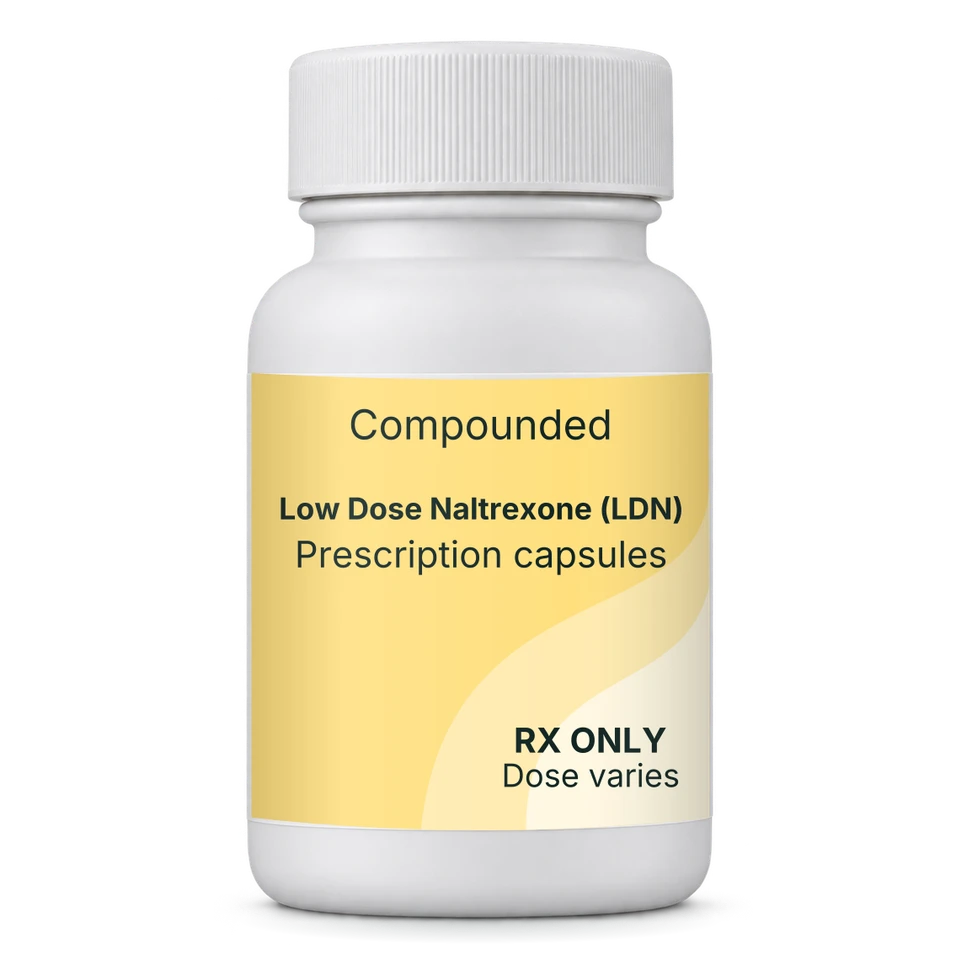


LDN-01Low Dose Naltrexone (LDN)
A low-dose oral prescription formulated to help curb cravings and support balanced immune and metabolic wellness under licensed clinician guidance.
$84/mo
Prescribed after a physician review.
Start the screener 2 min screenerPrivate online screener. A licensed US physician reviews every request.
Benefits
Designed for:
- One small capsule, taken by mouth
- A gentle, low starting dose, adjusted with your physician
- Check-ins through the first month, when adjustments happen
- Compounded to your prescribed dose by a licensed US pharmacy
Results may vary; not everyone responds.
How to use
Take exactly as your physician prescribes. Never use with opioid medicines.
Safety information
Compounded; not FDA-approved for this use, and prescribed off-label only after a physician evaluation. You must be opioid-free for 7 to 10 days before starting. Safety in pregnancy and breastfeeding has not been established. Results may vary; not everyone responds. Full safety information

The potential benefits of LDN.
Explore LDN With a Clinician-
Endorphins
May increase the body’s own endorphins. A brief, low-dose block of opioid receptors is thought to prompt the body to make more.
-
Inflammatory signals
May lower pro-inflammatory signals in the body. Researchers are studying this in relation to inflammation and pain.
-
Brain and nerves
May reduce inflammation in the brain by calming immune cells called microglia. Brain inflammation is linked with fatigue, mental health disorders, and cognitive decline, and researchers are exploring what role LDN may play.
-
Immune cells (TLR-4)
Blocks TLR-4 on immune cells in lab studies, which may help calm immune reactivity. How this works in people is still being studied.
Results may vary; not everyone responds.
Who LDN may be for.
People exploring LDN with a clinician often live with one of these. Open a condition to read more.
Low-Dose Naltrexone is used off-label for the conditions listed. Evidence varies by condition, and individual results are not guaranteed. A licensed clinician will review your health history, potential benefits, risks, and treatment suitability. LDN does not replace established prescribed treatments.

Less Pain. More Life.
When widespread pain and flare-ups make everyday activities exhausting, even small improvements can matter. LDN is being studied for its potential to ease fibromyalgia pain and support daily comfort.
Less Pain. More Life.
When widespread pain and flare-ups make everyday activities exhausting, even small improvements can matter. LDN is being studied for its potential to ease fibromyalgia pain and support daily comfort.
Ready to Feel Like You Again?
Still navigating fatigue, brain fog, and lingering symptoms long after your infection? LDN is being explored as an option for managing persistent Long COVID symptoms.
For the Days Your Energy Feels Out of Reach.
When exhaustion doesn’t disappear with rest, every bit of energy matters. LDN is being explored for its potential to support symptom management and quality of life.
Find More Comfort in Your Day.
Burning, tingling, and nerve discomfort can make even restful moments difficult. Researchers are studying LDN as a non-opioid approach to managing neuropathic pain.
Your Gut Shouldn’t Run Your Life.
Living with unpredictable digestive symptoms can make planning ahead feel impossible. Small studies have explored LDN’s potential to improve symptoms in people with Crohn’s disease.
Make Room for Better Days.
When fatigue, discomfort, and changing symptoms affect your routine, quality of life matters. LDN has been explored as a complementary approach to supporting everyday well-being in MS.
When Your Body Keeps You Guessing.
Flushing, itching, digestive discomfort, and unexpected reactions can disrupt your day. LDN is an emerging topic of interest for people exploring additional symptom-management options with their clinicians.
More Living. Less Working Around Discomfort.
Recurring aches can make the simplest routines feel complicated. LDN is being investigated across selected chronic pain and inflammatory conditions as a potential addition to individualized care.

How does LDN work?
The leading theory, in three steps. Researchers are still working out the details.
-
01Blocks briefly
A low dose of naltrexone blocks your opioid receptors for a few hours, instead of around the clock like the standard 50 mg dose.
-
02Your body responds
Researchers think your body answers that short pause by turning up its own endorphin signaling once the dose wears off.
-
03Dosed to you
The effect depends on dose and timing, so your physician starts low and adjusts slowly. Not everyone responds.
This is the proposed mechanism, and research on LDN is still early. LDN is compounded and prescribed off-label. Results may vary.

A Smaller Dose. A More Personalized Approach.
Traditional naltrexone tablets come in 50 mg strengths. Low-Dose Naltrexone (LDN) uses a fraction of that amount, a typical daily range of 0.5–4.5 mg, compounded to match your clinician-prescribed dose.
Compared to a standard 50 mg naltrexone tablet. Your clinician determines your starting dose and may adjust it gradually based on your individual needs.


Small Doses. Progress Over Time.
LDN is a personalized treatment approach that starts low and adjusts gradually based on your body’s response.
-
Week 1
Getting Started°
- Begin with a low, clinician-prescribed dose
- Allow your body to adjust to treatment
- Start tracking pain, fatigue, and sleep patterns
-
Week 4
Finding Your Balance°
- LDN is being studied for its potential to influence pain and inflammatory signaling
- Gradual dose adjustments help personalize treatment
- Monitor changes in comfort, energy, and daily function
-
Week 8
Evaluating Your Progress°
- Review potential changes in pain, fatigue, and quality of life
- Assess your response with your clinician
- Fine-tune your treatment plan based on your needs
-
Ongoing
Personalized Support°
- Continue with a dose tailored to your response
- Track long-term symptom patterns and daily well-being
- Receive ongoing clinical guidance as your needs evolve
°Illustrative treatment milestones, not guaranteed outcomes. LDN is used off-label for the conditions discussed. Benefits and response times vary, and some patients may not experience improvement.
Questions, answered plainly.
Anything else, ask your physician during your consult.

What is low-dose naltrexone?
Naltrexone is a medication FDA-approved at 50 mg for alcohol and opioid use disorder. Low-dose naltrexone (LDN) uses a much smaller dose, typically between 0.5 and 4.5 mg a day, prescribed off-label by a physician. Because no commercial product is made at that strength, it’s compounded for each patient.
Is LDN FDA-approved?
Not for the uses people ask about. LDN is compounded, and compounded medications are not FDA-approved. A licensed physician prescribes it off-label, based on your history.
Who shouldn’t take LDN?
Anyone taking opioids, including some cough medicines, anti-diarrheals, buprenorphine or methadone. You must be opioid-free for 7 to 10 days before starting, because naltrexone can trigger withdrawal. Safety during pregnancy and breastfeeding hasn’t been established. Tell your physician about any liver condition and every medication you take, and if you ever need surgery or emergency pain relief, tell the treating team you take naltrexone.
How long until I notice anything?
LDN is slow. Many people need several weeks at their settled dose before they can judge it, and some never notice a difference. Your physician checks in along the way so you aren’t guessing alone.
What side effects are common?
Usually mild, most often vivid dreams or trouble sleeping early on, which can often be helped by taking the dose in the morning. Some people have stomach upset or headaches. Tell your care team about anything that concerns you.
What form does it come in?
Aurelius Health Group LDN comes as a capsule you take by mouth, compounded to the dose your physician prescribes. If swallowing capsules is difficult for you, tell your physician during your consult.
Do I stop my other medications?
LDN is discussed as part of your existing care, not as a replacement for it. Never stop a prescribed medication without talking to the doctor who prescribed it. Your LDN physician will want the full list.
Does insurance cover it?
Rarely. Because LDN is compounded and prescribed off-label, most people pay cash. It is $84 a month, shown up front before you pay.
Important safety information
Compounded; not FDA-approved for this use, and prescribed off-label only after a physician evaluation. You must be opioid-free for 7 to 10 days before starting. Results may vary; not everyone responds. Not a substitute for emergency care: call 911.

Physician-supervised low-dose naltrexone.
Compounded and delivered by Aurelius Health Group. About two minutes. Request a free consultation with a licensed physician.
Before you start treatment
Share your health history
Start with a health assessment. Include your medical history, current medications, and what you’re looking for help with.
Get a clinician’s assessment
A licensed clinician reviews your information and determines whether treatment is appropriate. A prescription depends on that assessment.
Review your plan
If treatment is recommended, ask how to use it, what side effects to watch for, and when to follow up.
Check availability in your state. Review the total cost and any renewal or cancellation terms before you pay.